Tag: Faith

  • The Already-But-Not-Yet…

    The Already-But-Not-Yet…

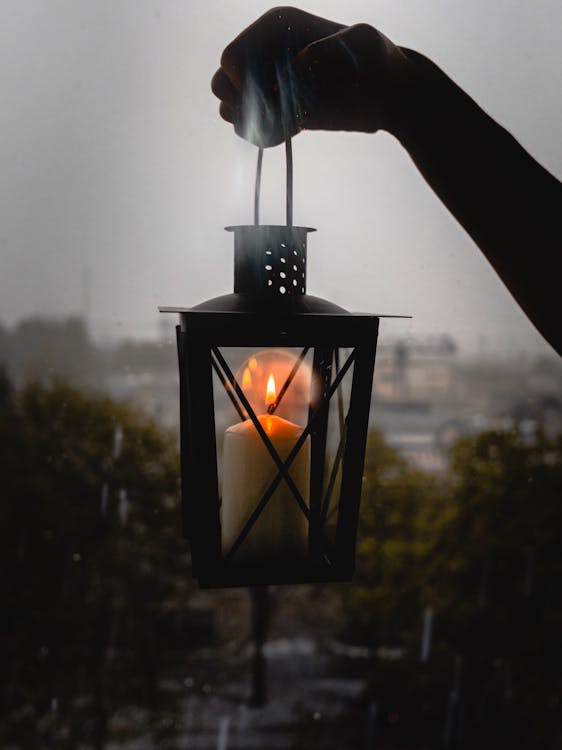
    As we light the first Advent candle, the candle of hope, we do so with the prophetic words of Jeremiah ringing in our ears, “‘The days are coming,’ declares the Lord, ‘when I will fulfill the good promise I made to the people…” (Jeremiah 33:14)

    These words were first spoken to those living in the aftermath of war; standing in the ashes and rubble of all they held dear.  Jeremiah reminded them of God’s promise to send exactly what they longed for, one who would restore justice and bring safety.  There was little proof that this “Righteous Savor” would arrive within their life time, in fact it took another 500 years before the birth of Jesus.  In the meantime these people had to get up every day and begin to slowly bring about life amid the ashes. 

    Author, professor, and modern day theologian, Kate Bowler writes that we, like those who first heard these words of Jeremiah, find ourselves living in the “already-but-not-yet.”  She is known by many as a modern day Jeremiah, one who has fought stage four colon cancer into remission and who discovered hope through a curtain of tears while standing in the ashes of life.  She knows what it takes to get up each day and bring about life in the midst of a terminal diagnosis, living through horrible cancer treatments that fell profoundly short of fulfillment, and yet, she brings good news from this land of loss and desperation; there is reason for hope.

    Bowler writes, there is a new hope, a new truth.  She writes that the season of Advent invites us to bear witness to the hope of God’s promise being fulfilled while also bearing witness to our not so perfect lives,  “God has made us for truth-telling, to have eyes that glimpse through tears at the already-and-not-yet that we live in. And at the same time, these same eyes are trained on Jesus, who embodies the compassion, restoration, and justice we long for.” *

    She teaches that the only way to true life sustaining hope is by being honest with ourselves; to open ourselves to lament all that is not perfect in our lives.  Truth is, the story of God’s work in the world consists both of hope and despair, not hope in the absence of despair, but hope in the face of despair and, often, through despair. 

    Living between the already-but-not-yet means we need to make space to lament. Lament is a biblical practice that invites us to express our sorrow, pain, or confusion. It is the act of grieving with God. By practicing this honest form of prayer we are creating a space for hope to take root despite all that isn’t perfect.*

    May your Advent journey begin with an honest and truly sustainable hope,

    Rev. Heather McCarrel

    (Kate Bowler, The Weary World Rejoices, Advent Study.  2024; pgs. 6-7)

    Photo by Gantas Vaiciulenas/Pexels
  • A Quiet Strength 

    A Quiet Strength 

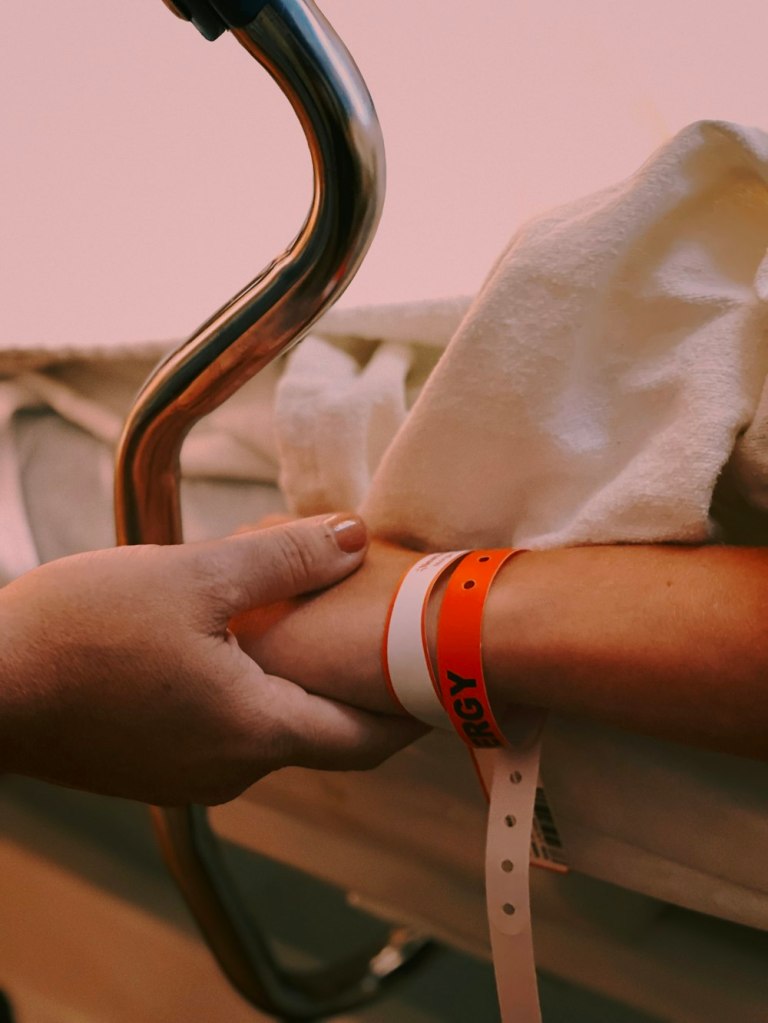
    When visitors couldn’t visit; the Chaplains did.  When the nurses, Doctors and all other clinical staff were run off their feet; so were the chaplains. When working meant donning goggles, N-95 masks, face shields, gloves, and gowns the Chaplains dutifully did so.  When the paid hours were completed but need for visiting continued; the Chaplains remained.   

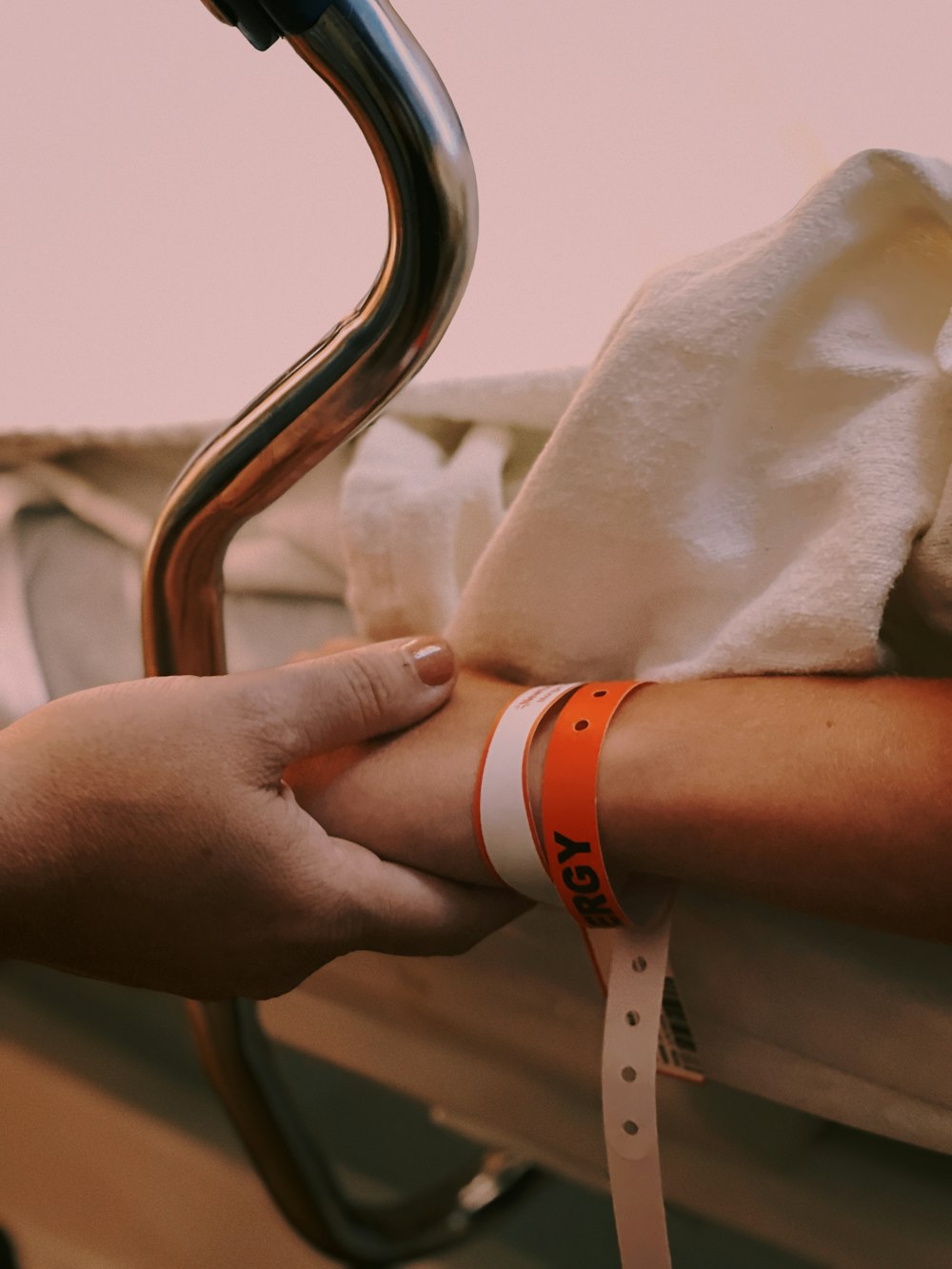
    It isn’t the hours of training, most having completed 1800 clinical hours and years of post-graduate studies, which set Chaplains apart.  It is their quiet yet humble presence that speaks the loudest.  They are the ones who pull up a chair and sit by the beds of the dying, ill, or scared, gently crafting meaning, peace and companionship. They are the ones who step in when all others have left. 

    To listen deeply to the needs of others; listening not only for what is spoken but for that which is left unspoken takes time, patience and a trained ear.  To understand the importance of stillness, quietude and presence is to know that healing happens in various and unseen ways.   

    There is a gross miscalculation of the necessity for Chaplains by many in positions of authority in healthcare settings today.  We know this to be true with the elimination of most Chaplain Positions across Grey-Bruce.  These cuts happened without any conversation, consultation or public awareness.  Some healthcare settings eliminated Chaplains entirely while others have kept Chaplains with just enough hours to fringe on tokenism; fulfilling minimum Accreditation requirements.

    If you have ever been blessed by the presence and care of a Chaplain in a local healthcare setting, then offer a prayer of gratitude for what they offered.  It has been a difficult time for local Chaplains and all prayers would be appreciated.

    Blessings,

    Rev. Heather McCarrel (BA, MDiv & Spiritual Care Provider/Chaplain)

    Photo by Jon Tyson/Unsplash

  • When Healing Doesn’t Come

    When Healing Doesn’t Come

    One of my favorite pastimes as a child was to go roller skating around the neighborhood.  My skates were two metal frames with four metal wheels that would buckle onto the soul of my running shoes. They did not have a rubber stop so when it came time to stop, I would throw myself down on the grass or against a tree.  Needless to say, I spent most of my summers with bandaged knees!  Eventually the wounds would scab over and before I knew it my knees were back to normal.  I took for granted that healing would always come.

    A couple of months ago I had a somewhat simple procedure performed on one of my knees.  The surgeon had said that within 6 to 8 weeks I would be back to normal.  Well, six weeks has come and gone and still my knee isn’t functioning like it should.  A few unexpected complications have delayed the healing. In my frustration I called out to God, demanding strength, patience and a pain free day.  

    In the Gospel of Mark there is a story of Jesus healing Samuel’s ill Mother-in-law followed by Jesus healing all kinds of people (Mark 1:29-34).  The story seems to imply that so long as you reach out to Jesus in faith, your healing will come.  The opposite truth being, if you do not receive healing, it must be a sign of some weakness in your faith.

    But we know that eventually healing didn’t come to Samuel’s Mother-in-law.  The same is true of all those Jesus healed; a day arrived when each and every one of them died.  Eventually, healing does not come.

    What do we do when the healing doesn’t come?  We all know those moments when our pain seems to increase and resilience seems impossible.  What do we do when all seems to fail?

    We do exactly what Jesus did. 

    In the same passage in the Gospel of Mark, after healing hundreds of people, Jesus went off alone to pray (Mark 1:35).  He knew that when we feel depleted, there is one who is always ready to listen, to offer peace and to make whole that which seems broken.  We are reminded to “Draw near to God and God will draw near to you.” (James 4:8 NKJV)

    May we always believe in God’s eternal plan, trusting in the one who sees beyond any of our limited horizons. 

    Blessings,

    Rev. Heather McCarrel

    Photo by Lukas Rychvalsky/Pexels

  • In A Word

    In A Word

    Photo by Pixaby/Pexels

    While at a meeting recently all those present were asked, “If you could describe your experience of the pandemic in one word, what would that word be?”

    I fumbled badly and it took me several words to finally conclude that the one word would be “faith”.  It was by faith that I journeyed the pandemic.

    This faith wasn’t a store bought faith with easy answers and platitudes printed on pretty cards. It wasn’t a faith that made the journey clear; there were twists, turns, and times of deep uncertainty.  As Martin Luther King, Jr wrote, “Faith is taking the first step even when you don’t see the whole staircase.” It certainly was a faith of unseen steps.  

    As I reflect on the past two years I clearly see times when I riled against God questioning God’s wisdom and presence and also times when I sat in silence refusing to meet God even in prayer. It takes a deep faith to turn to God and admit disappointment and discouragement in God’s seemingly lack of interest or care.  That was the kind of faith that held me during this difficult time, an honest faith that dared to turn toward God demanding answers and when receiving none; returning again to what seemed like a one- sided conversation.

    Ironically, my faith deepened in those silent moments and now, as I look back it is with gratitude that despite the profound difficulties I experienced God’s presence in more subtle and unseen ways.  I suspect this dark time steeped me in God’s ways of steadfastness and endurance.

    It was with this faith that I firmly put my feet on the floor every morning and stepped into each day.  I deliberately chose faith over fear even when choosing faith seemed ridiculous.  “Every tomorrow has two handles.  We can take hold of it with the handle of anxiety or the handle of faith.”  (Henry Ward Beecher) I chose the handle of faith and it has made all the difference.

    What one word would you use to describe your experience of the pandemic?

    Blessings,

    Rev. Heather McCarrel

  • The Good Shepherd

    The Good Shepherd

    Photo by Antonello Falcone/Unsplash

    Before beginning the BLOG I would like to welcome all the new comers to the Stainglasslens; in the past two weeks there have been several new “Followers” and it has been exciting.  I write weekly seeking to understand and/or celebrate God’s presence in the world, thank-you for joining me on the journey. 

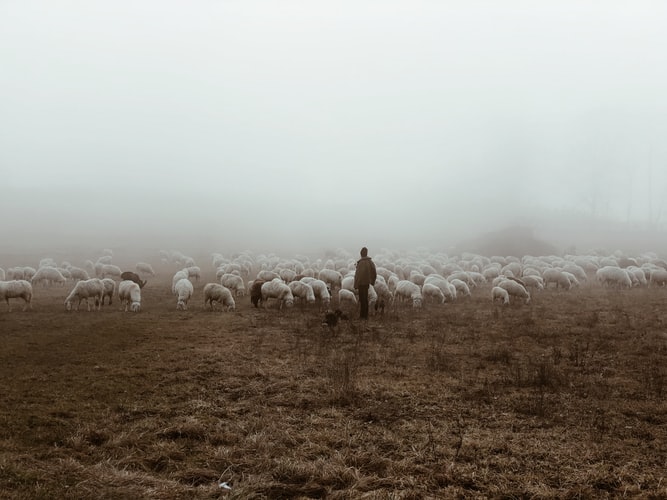
    This Sunday we at the Kemble-Sarawak, Zion-Keppel Pastoral Charge will be meeting for in-person worship on the side lawn of the Kemble-Sarawak Church.  The scripture passages we will be reflecting on are John 10:1-10 and Psalm 23.  In both passages we are reminded of a Good Shepherd who cares and tends to us each.

    This Good Shepherd image has been one that used to carry me through difficult times.  It was comforting to think that I was a mere sheep and Jesus, as an extension of God, was my Good Shepherd who cared for and protected me from all evil.  As it is written, “Who can be against me if God is for me?” (Romans 8:31)

    But then life happened.  There came cancer, sudden deaths, I watched 3 of my best friends die horribly agonizing deaths and then the pandemic arrived.  Days of isolation, un-measurable pain, suffering, and a worldwide death toll in the millions. 

    Where is the Good Shepherd in all of this?

    I learned that the bullies can win, with their lies and smear campaigns.  I learned that the structure put in place by well-meaning and intelligent individuals to bring justice can be manipulated and used as a weapon.  I learned that sometimes the truth is not believed while lies, gossip and posturing make the headlines.  

    Where is the Good Shepherd in all of this?

    I once sat with a cancer patient who reasoned that all her troubles happened during the split second that God blinked.  The idea that our Good Shepherd actually saw all these terrible things about to happen and did nothing to stop them was too much for her, so instead, she reasoned that God must sometimes blink and in that split second anything can happen.

    Well, I know the Good Shepherd.  I am convinced of God’s existence, I have experienced too much to deny God does exist and I know that there is a life beyond this life.  As a Chaplain, a minister and just a fellow sojourner on this earth I have seen, felt and experienced enough to know with certainty there is more then we can imagine.

    So, how does one reconcile the knowledge of the existence of the Good Shepherd with the occurrence of horribly cruel and destructive events?

    For me it melts down to what is written in Isaiah 55:8-9,

    “For my thoughts are not your thoughts,
        neither are your ways my ways,”
    declares the Lord.
    As the heavens are higher than the earth,
        so are my ways higher than your ways
        and my thoughts than your thoughts.”

    Can a sheep ever possibly understand the ways of the Shepherd?  No. 

    Can we ever possibly understand the ways of God?  No.

    That is why knowing the Shepherd makes all the difference.  To trust in God’s plan, to lean into God presence, to give all the pain, all the hurt, all the misunderstandings, all the times we cannot defend ourselves back to God and instead live in a childlike dependency, an innocent trust is, in my opinion, the only way we can travel this life without despair.  It is the only way we can be a kind, loving, and wise presence.  It is counter cultural to say, “Despite all the evidence, I trust in the Good Shepherd.”  This kind of faith and trust is a radical and life altering way to spend our days.

    It is the only way, I have found to inner peace and ironically, with this faith I have found a part of me open up  to experience God every day in small almost unnoticeable ways.  But before I could experience this presence I first had to give into trusting this Good Shepherd when trusting was the least logical thing to do.

    May the tests and trials of this life deepen your faith and bring you closer to the un-explainable love of the Good Shepherd.

    Blessings,

    Rev. Heather McCarrel