It was 17 years ago that I accepted a new position titled “End of Life Chaplain”. My pay came from a large corporation whose focus was the care of the elderly in over 400 long term care and assisted living facilities across the country. I was hired to help 4 of those facilities.
Two coronaviruses later (SARs and COVID) and 17 years of experience have resulted in many changes; both to myself and the setting in which I serve. My title now is “Spiritual Care Provider” and I work for a local Health Care Service in a hospice setting.
Despite the clinical changes over the years human nature has remained much the same. As I accompany those and their close friends and family toward death, I have learned the power of story. To listen to the stories of other people’s lives; witnessing their struggles, sacrifices, regrets, achievements, and joy is a profound privilege.
Rarely do I hear stories of things accumulated. Those summarizing their lives tend not to list what furniture they had or how many homes they owned. Not once has anyone told me what kind of car they drove or how much Gucci they had in their closets. Instead, I have stood witness to childhood memories, stories of perseverance over trials, and setbacks recovered. There are always stories of love; the kind of love that leaves its impression on one’s life, the love of parents, siblings, spouses, children, pets, and dear friends. These are the stories that matter at the end of it all.
These are stories of how each has filled their space in the world; how their lives came to have meaning and this meaning is significant.
Concentration camp survivor, Viktor E. Frankl wrote in his book, Man’s Search For Meaning, “Everyone has their own specific vocation or mission in life; everyone must carry out a concrete assignment that demands fulfillment. Therein they cannot be replaced, nor can life be repeated. Thus, everyone’s task is unique as is their specific opportunity to implement it.”
It is never too late to rewrite the story of our lives asking, “how am I filling my space in the world?”
He arrives daily, usually just around supper time and makes his presence known by singing a low sad melody. Dutifully I stop whatever I am doing and lay out fresh food with hopes he may stay awhile.
His lonesome presence has become a part of my daily routine as I deliberately pay him attention; wanting him to know he is noticed, valued and precious in someone’s eyes.
His official name is Zenaida Macroura, many know him as a Mourning Dove; I have named him Bedad Kissimi (B.K. for short). Bedad is an Old Testament name meaning, “alone or set aside” and once while visiting I was able to point Bedad out to a friend who shared that the name Kissimmi is an Indigenous name that means ‘alone.’ So, this is how Bedad Kissimi came to be named.
It isn’t clear why B.K. is all alone. Presumably his mate has died but perhaps she tossed him out of the nest for spending too many late nights with his buddies or for leaving his dirty socks under the bed. It doesn’t matter; I am tired of the world’s judgements on others. He has bravely made his aloneness known and I choose to respond with kindness, friendship and fresh birdseed.
His friendship has come to mean much to me, having him trust me is truly a privilege. At first he would stay in the tree top until after I had placed the seed and returned inside. Now, he stays only an arm’s length away, we make eye contact most days as he tilts his head in gratitude.
In fact, I have wondered who is helping who. I simply drop seed on the deck floor while he engages the strings of my heart!
As Charles Chaplin said, “He who feeds a hungry animal, feeds his own soul.”
After having days of sunshine, warm spring temperatures and budding flowers winter has returned. In a matter of one day we went from sundresses and shorts back to mittens and wooly toques.
We could be discouraged by this return of cold gray days or we could be grateful for the week of warmth we enjoyed. Often life brings us to moments of choice, moments when we stand at the cross roads of doubt or faith, hope or despair, gratitude or regret. How we respond determines a lot on our situation. There are times of despair and regret just as there are times of hope and gratitude. How long we linger in each is entirely up to us.
At first I was grumbling as I dug out warm socks and a sweater but realized these grumblings only left me feeling sad and discourage. So, I decided to try a different outlook. I silently offered a prayer of gratitude for the morning spent sitting under the empty maple tree watching the birds, the first BBQ supper of the year and the evening when we reclined on the back deck admiring the stars. What wonderful memories to warm these chillier days.
Besides, we know these chilly days are numbered. These are the days we enjoy our last bowl of chili or beef stew until autumn, the days that afford us time to switch out our winter clothes with the summer fair. Each moment holds so much to cherish. As Matt Haig writes, “We just have to close our eyes and savor the taste of the drink in front of us and listen to the song as it plays.” (Midnight Library).
May you find reason to rejoice on these last dull days of the northern breeze trusting that warmer days are just around the corner.
These late days of lent and early days of spring are known as the ‘in-between’ days or as Dr. Seuss dubbed them the “Waiting Place”. This is a place in between what was and what will be.
We are in the days when the calendar tells us spring has officially arrived and yet we wait for true spring weather; warm days filled with birdsong and blooming tulips.
These are days after the snow shovels have been placed back in the garage but before we can get out the garden spades or lawn rakes, days of restlessly waiting.
We also are in the days of the Lenten journey; days of waiting to sing our hallelujahs.
We tend to busy ourselves in this ‘waiting place’ with mindless tasks. We call it spring cleaning when we empty all the kitchen cupboards and wipe them down, or we go through all the winter mittens, scarves and hats sorting them into piles. These are unnecessary tasks invented to keep us busy during these waiting days.
Instead we should simply pause and allow ourselves to be quiet before God. This “waiting place” is ripe in opportunity to hush the constant racket and still our ever restless ambition long enough to sense the Divine presence in the air around us.
This is a time to put down the phone, turn off the TV or close the laptop.
Perhaps God has created this “Waiting Place” as an invitation to sit in awareness of God’s peace, healing and love. I suspect this divine prompting is for our own good, a time to slow our pace and clear our spiritual vision; a practice that sharpens our ability to witness the divine dance that happens around us daily.
May we all hold space this Holy Week to be quiet before God and may this be a time of deep renewal.
What an exciting day; the day the seeds arrive! These small colourful packets bring magic and joy to an otherwise dull February day transporting me to warm afternoons spent toiling under the sun. Each packet holds small pearls of hope.
The shriveled up peas, tiny radish seeds and the sprinkling of promised lettuce looks insignificant to anyone who has never coaxed life from a garden. But, to those who know of its lure, these packets harken to autumn pleasures of full fruit cellars, preserves and hanging herbs. These tiny gems are deceptive in their power, tenacity and transformation.
Lent is a “seedy” season; a season of great transformation. We deliberately turn inward to examine our personal relationship with God all the while moving steadily toward a crucified death. And, like a seed planted in the dark soil, the darkness cannot stop life from emerging. Similarly, this Lenten journey brings us to a resurrection that teaches death does not have the final word.
So, yes, Lent is the perfect time for the seeds to arrive! As Jesus taught, “The kingdom of heaven is like a mustard seed, which a man took and planted in his field. Though it is the smallest of all your seeds, yet when it grows, it is the largest of garden plants and becomes a tree, so that the birds of the air come and perch in its branches.”
May we all have a “Seedy” Lent that transforms these darken winter days to days of spring flowers, bird song and joyful celebration.
It was a damp, cool and foggy morning; perfect for a walk through the park. As we quietly strolled past the tall bare trees draped in mist and over small wooden bridges almost swamped by the over flowing streams I thought how perfect this weather fit my mood.
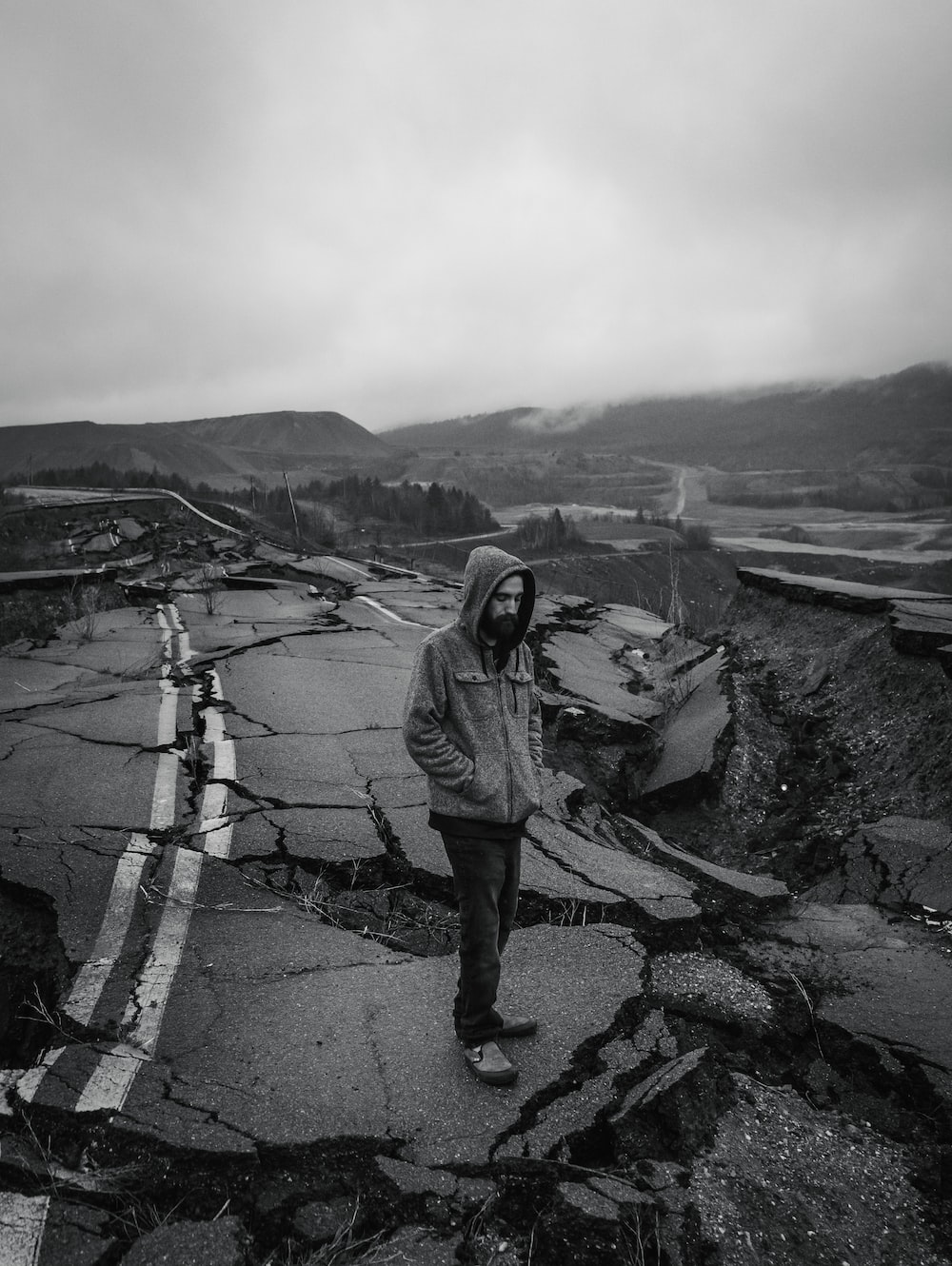
The recent headlines had left a fog hanging over me, images of broken bodies pulled from tons of debris. Two massive earthquakes in Turkey and Syria, the first at 4:00 a.m. on February 6th as folks were slumbering snuggly in their beds registered a 7.8 magnitude which was felt as far afield as Lebanon, Cyprus, Greece, Israel, and the Palestinian territories. A second quake, which recorded a magnitude of 7.5, struck just 9 hours later. Both resulting in a death count at 41,000 and rising.
How can one look at the images, read the data, watch the carnage on the evening news and not be affected? Besides donating funds (check out Canadian Red Cross at redcross.ca) we can also pray asking for God’s light, love and healing to reach each victim and strengthen the rescue workers.
It is easy to despair and feel vulnerable. We know that one minute these people were sleeping soundly and the next chaos ensued. We know they did not deserve this to happen and we know, from witnessing this devastation that it could happen to us too. Perhaps our chaos may not come as an earthquake but may be disguised as a pandemic, cancer or a car accident. Some were left feeling anxious this past weekend as an American Fighter Jet shot down an Unidentified Flying Object over Lake Huron. This happened way too close to home!
Thing is, we have only so much control over what happens in this world and there is no sense worrying over that which we cannot control. What we can control is how we spend our days. The moments of our lives add up to the sum of our days and result in the story of our lives. It matters that we handle what we can control well.
Richard Wagamese, a truly inspiring First Nations writer shares this wisdom,
“All we have are moments. So live them as though not one can be wasted. Inhabit them, fill them with the light of your best good intention, honour them with your full presence, find the joy, the calm, the assuredness that allows the hours and the days to take care of themselves. If we can do that, we will have lived well.” (Embers, 161)
May we all continue to hold the victims in our prayers while also shaping our moments into lives of light, joy, peace and love.
Jesus tells us that we are the light of the world and we are to shine His light for all to see; “do not hide it under a bushel”, he warns (Matthew 5:16). Hearing these words always reminds me of the author Robert Louis Stevenson who is best known for works such as Treasure Island and Strange Case of Dr. Jekyll and Mr. Hyde. I once read a story from his childhood that illustrates what it means to be Christ’s light in the world.
As a child Robert Louis Stevenson was in very poor health. One night, when he was quite sick, his nurse found him with his nose pressed against the frosty pane of his bedroom window. “Child, come away from there. You’ll catch your death of cold,” but young Robert would not budge. He was mesmerized as he watched an old lamplighter slowly work his way through the black night lighting each street lamp along his route. “See, look there,” Robert pointed, “There’s a man poking a hole in the darkness.”
That is what we are called to do, poke holes in the darkness. To be Christ’s light means we go into dark places and share God’s love, forgiveness and acceptance. These dark places may be grief, poverty, illness, injustices and loneliness.
It takes courage and faith to be Christ’s light in a darkened world. So often the world rewards the “winner” at the risk of many “losers”. What would TV be like today if we took out the competition to be the best and instead just celebrated everyone’s unique talents? What if everyone received second place and praising God came in first place? Then we would see the light everywhere!
We need not do grand acts that bring us a lot of attention and accolades, as Neal A. Maxwell writes, “Small lights have a way of being seen in a dark world.” Simple acts as taking time to listen to each other, building each other up and speaking words of love produce a powerful light.
Dwight L. Moody put it best when he preached, “We are told to let our light shine, and if it does, we won’t need to tell anybody it does. Lighthouses don’t fire cannons to call attention to the shining—they just shine.”
The world is full of things that boggle my mind and are beyond my understanding. For example, I have never understood FAX machines. How can a few words on a piece of paper travel over wires and arrive on another piece of paper 100 miles away? Or, why can’t I hum while holding my nose (you just tried, didn’t you?) and why is Earth the only planet in our solar system not named after a God? Who named Earth in the first place?
There are so many questions with so few answers. As my trips around the sun accumulate I have become more comfortable with the unknown, trusting in the fact there is a God who knows all the answers. This God provides a peace that goes way beyond our understanding; a peace that holds us together when all around us is falling apart. I don’t understand it, but I have learned to trust in it.
The Apostle Paul writes, “Do not be anxious about anything. Instead, in every situation with prayer and petition with thanksgiving, tell your requests to God. And the peace that surpasses all understanding will guard your hearts and minds in Christ Jesus.” (Philippians 4:6)
This peace does not promise there will be no conflict, hardships or grief. Instead this God-given peace will hold us together with the powerful knowledge we are not alone. God is with us, despite whatever we are facing. As Jesus tells us, “Peace I leave with you; my peace I give to you. Not as the world gives do I give to you. Let not your hearts be troubled, neither let them be afraid.” (Jon 14:27)
Take Mother Mary for instance, at the young age of 12 she is visited by an angel who shares the startling news that Mary will become pregnant and bear a son. As if it isn’t shocking enough to be visited by an angel Mary also has to adjust to the news that she, an unwed virgin girl, will soon become pregnant and give birth to not just any baby but God’s only begotten son. Talk about mind boggling!
One of the things that intrigues me about this story is how Mary goes from asking, “How can this be?” to declaring, “Let it be.”
How do we find our way, like Mary, to say “let it be”? I am not suggesting that getting there is easy or quick, but I think Mary shows us how to journey to “let it be”. She doesn’t avoid the storm that lies ahead; instead she enters the eye of the storm, allowing the chaos of emotions, relationships, and circumstances, swirl all around her. She does this by depending on God to lead her through the storm.
Out of Mary’s story we see a confidence amidst crisis which is the mark of a mature faith. She has heard the deep meaning of “Be not afraid.” It is a message of assurance that through the wilderness, or the grief, or in the middle of chaos, along the journey we are not alone. It is that sense of God -with-us which is the profound message of Christmas. It is a love and peace that dwells deep in our souls.
This week as we light the Second Advent Candle, the Candle of Peace, may we all trust in the Prince of Peace to accompany us with a calm and peaceful presence.
The stillness of November is a refreshing change after all the exuberance of October and is a welcomed pause before the colourful celebration of December.
The muted shades of November only add to its peacefulness. The soft water-coloured skies with fleeting rays of sunshine make the perfect backdrop for the beauty of each bare tree. The quietude of the first snowfall welcomes us into a space of tranquility and peaceful reflection while the long evenings are perfect for simple pleasures like warm bread pudding shared by a crackling fire.
Historically November was a restful month after a busy autumn of bringing in the harvest, preparing the fruit cellar, stacking the newly cut winter wood and “shoring up” the barn. These days we busy ourselves with leaf raking, placing the patio furniture into winter storage, winterizing the cottage, getting the snow tires on, having the car oiled and ensuring the snow blower is started up and ready to go.
In rural ministry November sees a return of many to Sunday morning worship! The hymn singing is more robust, the choir loft fills and the volume of chatter at Fellowship augments to it loudest.
Aw, yes, November is a month filled with many gifts. As Henry David Thoreau wrote, “The thinnest yellow light of November is more warming and exhilarating than any wine they tell of. The mite which November contributes becomes equal in value to the bounty of July.”
May November be a month that fills your heart with peace and your life with God’s divine light.
In the three years I served as their Student Minister we only sang the hymn Amazing Grace once and that one time taught me a powerful lesson. By the time we got to the second verse,“’Twas grace that taught my heart to fear, and grace my fears relieved;” only my voice could be heard.
I looked up from the pulpit and saw an unforgettable sight. Some had sat down while others grabbed a tissue from the passing tissue box, many were wiping tears from their eyes or blowing their noses. The pianist and I exchanged nervous glances as I continued to sing; part way through the third verse we stopped all together.
Later, during fellowship, I gently inquired about their response to this hymn. One of the older women quietly said, “To this day I can still see that small jeep that would drive through the village.” The others nodded and another woman shared, “I recall the day that jeep came and parked in front of our house; my mother started crying before she even answered the door.”
“Yes, the day we heard about Max it was that jeep. That day they came about the Smith’s son and the McGregor’s son as well. It was a sad day indeed.” This from one of the old timers who usually didn’t say much, then while wiping a tear from his cheek he added, “That hymn, Amazing Grace, takes me back to the war years and the news that jeep would bring.”
After a pause he said, “It was just before supper and I recall standing by the stove to mind the potatoes while my Mother answered the door, I can still hear her scream. We ran down to the garage to get our Father but he was half way up the lane, he had seen the jeep stop at our house, he knew what we had feared.”
Looking straight at me one of the women shared, “Everyone would freeze with fear when that jeep came into the village; afraid it would be their family receiving the bad news.”
She added, “Then we would gather in the cemetery and old Alec would play the hymn “Amazing Grace” on his trumpet as we added names to the war memorial. A village our size never forgets this kind of grief. We almost lost an entire generation of young men by the time the war ended.”
The room fell silent as I pieced together this collective memory of my parishioners, a military jeep that delivered death notices and the grief relived as we sang the hymn “Amazing Grace.”
I turned to one of the granddaughters who was savvy with computers and asked, “If we were to get photos of the young men who died could you create a power point for us?” She was excited by the challenge, so the next two weeks was spent gathering the photos and, on the Sunday, closest to Remembrance Day we all came to see what she had created.
1940’s band music played in background while uniform clad youth smiled back at us, many of them standing in front of familiar houses.
This time I was ready with Kleenex boxes in each pew and tables set up at the front of the sanctuary to hold framed pictures of beloved family members who had served in the armed forces or air forces. One family brought in an entire uniform which was laid out while another family brought in cherished letters from the front lines.
There was no sermon that day; valuable time was spent in hearing the stories of each young man and there were plenty of sacred pauses as we read off the Rolls and listened to the Last Post and Rouse.
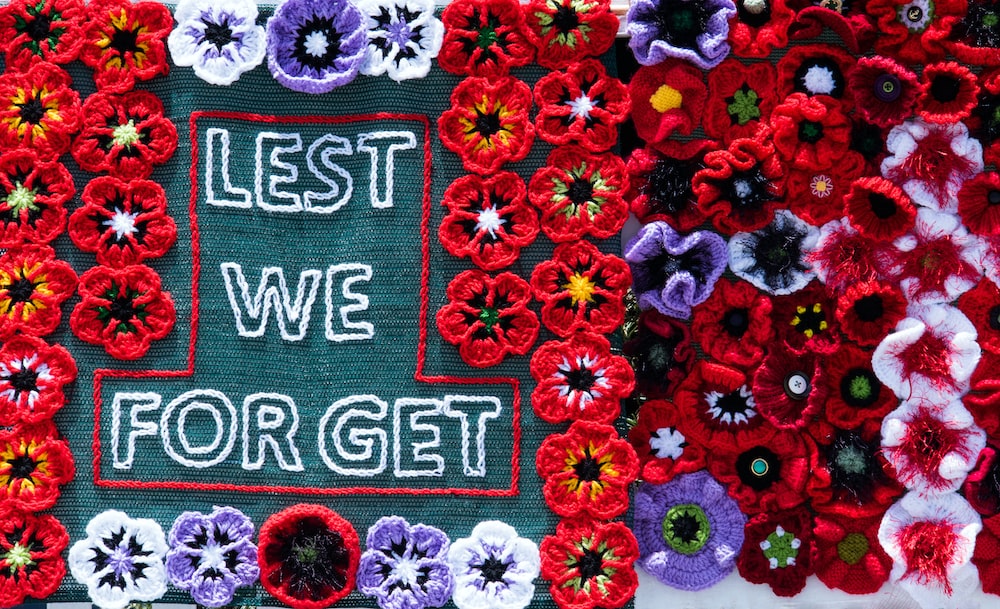
I have made a point to honour Remembrance Day every year since, no matter which church I serve. It is important to honour the lives and sacrifices made by those who laid down their lives, so we can live so freely and abundantly. Jesus tells us, “No one has greater love than this, to lay down one’s life for one’s friends.” (John 15:13)
These are the saints who watch over us and I suspect there will come a day when we each discover that these saints were never very far from us at all.
Blessing to all who take time this coming week to honour those who have served and are serving today,
Rev. Heather McCarrel
(It is over 20 years since I was a Student Minister. Now, the young granddaughter who created the Power Point is a mom and an excellent nurse who works in the same Unit that I work as the Chaplain. Recently we reminisced about that powerful Sunday service so many years ago. Some will recognize this BLOG as I have shared it before.)







 Stain Glass Lens of the 21st Century