Category: encouraging

  • The Already-But-Not-Yet…

    The Already-But-Not-Yet…

    As we light the first Advent candle, the candle of hope, we do so with the prophetic words of Jeremiah ringing in our ears, “‘The days are coming,’ declares the Lord, ‘when I will fulfill the good promise I made to the people…” (Jeremiah 33:14)

    These words were first spoken to those living in the aftermath of war; standing in the ashes and rubble of all they held dear.  Jeremiah reminded them of God’s promise to send exactly what they longed for, one who would restore justice and bring safety.  There was little proof that this “Righteous Savor” would arrive within their life time, in fact it took another 500 years before the birth of Jesus.  In the meantime these people had to get up every day and begin to slowly bring about life amid the ashes. 

    Author, professor, and modern day theologian, Kate Bowler writes that we, like those who first heard these words of Jeremiah, find ourselves living in the “already-but-not-yet.”  She is known by many as a modern day Jeremiah, one who has fought stage four colon cancer into remission and who discovered hope through a curtain of tears while standing in the ashes of life.  She knows what it takes to get up each day and bring about life in the midst of a terminal diagnosis, living through horrible cancer treatments that fell profoundly short of fulfillment, and yet, she brings good news from this land of loss and desperation; there is reason for hope.

    Bowler writes, there is a new hope, a new truth.  She writes that the season of Advent invites us to bear witness to the hope of God’s promise being fulfilled while also bearing witness to our not so perfect lives,  “God has made us for truth-telling, to have eyes that glimpse through tears at the already-and-not-yet that we live in. And at the same time, these same eyes are trained on Jesus, who embodies the compassion, restoration, and justice we long for.” *

    She teaches that the only way to true life sustaining hope is by being honest with ourselves; to open ourselves to lament all that is not perfect in our lives.  Truth is, the story of God’s work in the world consists both of hope and despair, not hope in the absence of despair, but hope in the face of despair and, often, through despair. 

    Living between the already-but-not-yet means we need to make space to lament. Lament is a biblical practice that invites us to express our sorrow, pain, or confusion. It is the act of grieving with God. By practicing this honest form of prayer we are creating a space for hope to take root despite all that isn’t perfect.*

    May your Advent journey begin with an honest and truly sustainable hope,

    Rev. Heather McCarrel

    (Kate Bowler, The Weary World Rejoices, Advent Study.  2024; pgs. 6-7)

    Photo by Gantas Vaiciulenas/Pexels

  • Summer Solstice Has Arrived!

    Summer Solstice Has Arrived!

    Today, Thursday June 20th, 2024, at about 4:50 p.m. we will experience the moment of perfect balance! This is the day when the sun reaches its highest and northernmost point in the sky, according to the Farmer’s Almanac, marking the first day of astronomical summer; the summer solstice.

    “The summer solstice occurs in the northern hemisphere when the northern half of the globe has its closest tilt towards the sun.  Conversely, it’s also when the southern hemisphere experiences the winter solstice, as the southern half of the globe is at its furthest tilt away from the Sun.” (Adler Planetarium)

    Traditionally the summer solstice has been celebrated in many ways such as Midsummer Festivals which include bonfires, picnics, singing, maypole dancing, and hikes to elevated heights either to witness the sunrise or sunset.  Some take to the beach as a means of commencing their summer rituals of sailing, surfing, or simply sun bathing.  Others plan a special meal with friends and family marking this special day with a BBQ and a backyard celebration.

    Author Sarah Ban Breathnach reminds us that “One way of celebrating the Solstice is to consider it a sacred time of reflection, release, restoration, and renewal.”

    However you may mark the solstice remember that today affords us 15 hours of day light to inaugurate the summer with deliberate joy, celebration, and fun; the perfect way to begin this most welcomed season. 

    Blessings,

    Rev. Heather McCarrel

    Photo by Travis Rupert/Pexels

  • Why Write?

    Why Write?

    A few folks have asked me recently why I had stopped writing.  Perhaps it was the darkness of winter that had seeped deep into my bones resulting in a tiredness that weakened me.  Or, perhaps it was a winter sleepiness that, like a cloud of scentless poison, had lulled me into a dull haze.  I am not entirely sure.  It just felt that my small voice was no match for the looming issues facing us all.  

    Such issues as homelessness which seems to have grown into a global pandemic matched only by the surreal number of accidental overdoses and both pale in comparison to the global environmental catastrophes reported daily.

    It all had silenced me.

    Until early in spring, before dawn one morning I heard this lone bird singing a thin melody.  I stepped out in the predawn darkness searching skyward; no other bird had joined the song and yet, it continued to sing. Something in its refrain struck a chord deep within me, encouraging me to rise again and join my simple voice against the darkness.

    This courageous birdsong reminded me that there is still some worthiness in this worn out world.  There is beauty, kindness, and goodness still to be found; the world hasn’t gone entirely to rot.

    My voice may rise in a whisper offering little wisdom except the observation of what beauty I find.  As I recently read, “We do not see the world as it is, we see it as we are.” 

    May we all reside within a place that hears the little bird singing in the darkness of a beautiful world.

    Blessings,

    Rev. Heather McCarrel

    Photo by lil artsy/Pixels

  • Happy Mother’s Day

    Happy Mother’s Day

    Mother’s Day has come around again.  In seminary we were taught that these “Hallmark Holidays” were more about turning a profit for big business than genuine sentiment.  That wasn’t the way it started; Mother’s Day has an honest beginning.

    Anna Jarvis of Philadelphia, whose mother had organized women’s groups to promote friendship and health, originated Mother’s Day. On May 12, 1907, she held a memorial service at her late mother’s church in Grafton, West Virginia. Within five years virtually every state was observing the day, and in 1914 U.S. Pres. Woodrow Wilson made it a national holiday. (Britannica)

    There is a tradition that on Mother’s Day one wears a flower pinned to their lapel in honour of their mother.  The tradition holds that a white flower indicates if one’s mother has died, and a red or pink flower tells of a mother who is still alive. 

    Sadly, I find myself wearing a white flower on Mother’s Day.  I miss my mom daily and am grateful that her wisdom and lessons remain with me.   

    This past week I had the opportunity to visit with two lovely women from the church I serve.  Each knows the depths of grief that comes from the deaths of their spouses, and each has lived through the hardships of life.  They both are advanced in years and can fondly remember days of better health and of happier times.  And yet, each visit was filled with laughter and conversation that never turned dull or negative.  These are not the type of women who spend time in gossip or judgement of others. Instead, I heard of future vacation plans, gardens planted and family gatherings.  The time flew with each visit.

    As I reflected on both women, I realized they each model nurture to me and remind me of my own Mother and Grandmothers.  Their laughter, hospitality and wisdom mark the way I want to travel as I grow in years.  I too would like to be a beacon of nurture to younger women and be one who shares joy, acceptance, and grace that they each modelled for me.

    This Mother’s Day I thank God for the mother I had and for all those that still nurture the world with their care, grace, and laughter.

    Happy Mother’s Day,

    Rev. Heather McCarrel  

    Photo by George Dolgikh/Pexels

  • Defense Against The Darkness

    Defense Against The Darkness

    Early every November, when the days are short and nights are long, I gather all that is needed to create my defense against the darkness.

    It usually entails one trip to the local hardware store, old newspapers from the recycling bin and about 2 hours of my time.  With the kitchen counter cleared and covered with the old newspapers I begin this most necessary task.

    It is a dirty task but one that raises my spirits like no other on a dark November evening.  The repotting of my house plants!

    I lovingly choose which of my growing collection needs a bigger or deeper pot and with tender words of encouragement the procedure begins.  Once the new pot is prepared, I delicately lift the plant out of its old digs and gingerly place it within the folds of freshly fluffed soil.  The roots are carefully covered followed by the gentle cleansing of each leaf.  Once complete, fresh water is poured over the soil and misted across the foliage. Then that plant is returned to its place within our home looking refreshed and standing a bit prouder.

    My home is full of green plants, some hanging from the windows, others along windowsills or in planters.  We have an arrangement, me, and these green roommates.  They promise to filter the air in our home filling the grey November days with many shades of green; shades that provide a peacefulness that both comfort and enliven my spirit.  I in return visit each one weekly nourishing them with loving words, fresh water and at times some liquid food.

    As the quote says, “Having indoor plants is like having little pockets of joy throughout your home.”  These pockets of joy are truly a gift from God!

    Blessings,

    Rev. Heather McCarrel

    Photo by Huy Phan/Pexels

  • Silent Beauty

    Silent Beauty

    Dr. Maria Montessori, an Italian physician and educator best known for her philosophy of education, taught the value of silence to her young students.

    In her book, The Secret of Childhood, she explains that one day she carried a sleeping infant into a busy classroom and all the students quieted down to observe the peacefulness of the infant.   This silence became a game in her classroom and it wasn’t long until the children grew to appreciate all that silence brought, “Silence is refreshing, giving our overloaded senses a break. When it is silent it is easier to notice how smooth the geometric solid is in our hands. It is easier to hear the gentle sound of a zipper, or notice the scent of fresh cut flowers. Silence brings us back into ourselves, yet is also a profound connection to everyone else in the room at the same time.”

    It isn’t unusual to find plants and flowers in a Montessori classroom, each used as a lesson in how beautiful things happen in silence, “Watch as the flower blooms in complete silence or how that green plant grows up the side of the window in utter silence.” The same is true when appreciating a sunrise or a sunset, each taking our breath away without making one bit of sound.

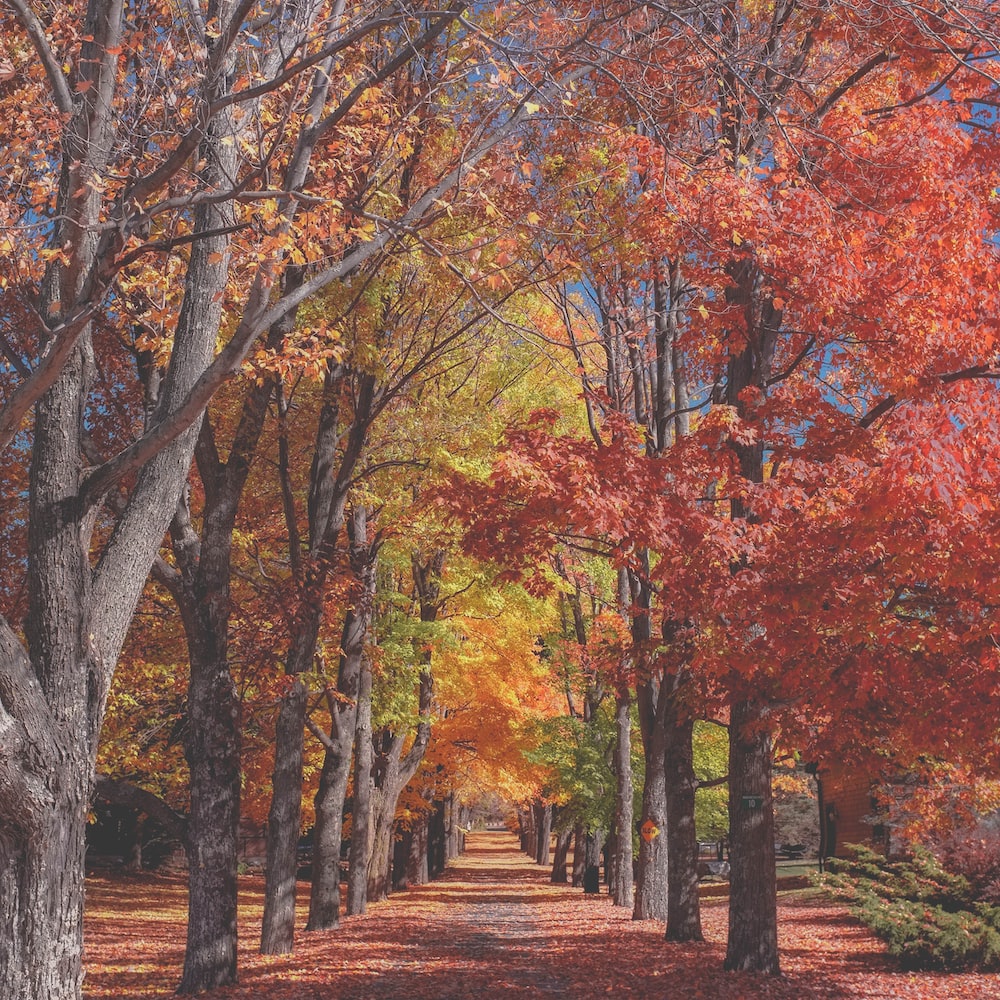
    Autumn is a wonderful example of God’s beauty in silence.  The silent trees fill the landscape with a brilliant celebration; bright yellows, jubilant oranges, and rapturous reds, awing us into a silent reverence.

    May we take this lesson and like Dr. Montessori and her students, savor all that silence can teach us.

    Blessings,

    Rev. Heather McCarrel

    Photo by Courtney Read/Unsplash

  • Writing Our Stories

    Writing Our Stories

    It was 17 years ago that I accepted a new position titled “End of Life Chaplain”.    My pay came from a large corporation whose focus was the care of the elderly in over 400 long term care and assisted living facilities across the country.  I was hired to help 4 of those facilities.

    Two coronaviruses later (SARs and COVID) and 17 years of experience have resulted in many changes; both to myself and the setting in which I serve.   My title now is “Spiritual Care Provider” and I work for a local Health Care Service in a hospice setting.   

    Despite the clinical changes over the years human nature has remained much the same.  As I accompany those and their close friends and family toward death, I have learned the power of story.  To listen to the stories of other people’s lives; witnessing their struggles, sacrifices, regrets, achievements, and joy is a profound privilege.

    Rarely do I hear stories of things accumulated.  Those summarizing their lives tend not to list what furniture they had or how many homes they owned.  Not once has anyone told me what kind of car they drove or how much Gucci they had in their closets. Instead, I have stood witness to childhood memories, stories of perseverance over trials, and setbacks recovered. There are always stories of love; the kind of love that leaves its impression on one’s life, the love of parents, siblings, spouses, children, pets, and dear friends.  These are the stories that matter at the end of it all.

    These are stories of how each has filled their space in the world; how their lives came to have meaning and this meaning is significant.   

    Concentration camp survivor, Viktor E. Frankl wrote in his book, Man’s Search For Meaning, “Everyone has their own specific vocation or mission in life; everyone must carry out a concrete assignment that demands fulfillment. Therein they cannot be replaced, nor can life be repeated. Thus, everyone’s task is unique as is their specific opportunity to implement it.”

    It is never too late to rewrite the story of our lives asking, “how am I filling my space in the world?”  

    Blessings,

    Rev. Heather McCarrel

    Photo by Angela Roma/Pexels

  • Reaping What We Sow

    Reaping What We Sow

    The vegetable garden has been a source of constant inspiration this summer, time spent weeding, poling up the beans and peas and trying to stay ahead of the many intruders trying to nibble at my pending harvest.  Recently, under a smoke filled sky and through a dense humidity I found myself wondering why I even bother gardening but the answer came almost as soon as the question was formed.

    The answer arrived at the far corner of the plot where I purposely planted the tomato plants. I had arrived prepared to cage up the four tomato plants I placed weeks earlier and was surprised to find not 4 tomato plants but three times more!

     Puzzled at first I took to pulling up the weeds only to discover growing wildly among the rows were tall tomato plants, seemingly they were the result of the seeds from last year’s fallen fruit.  I wasn’t sure at first if they should be allowed to continue or if I should pull them out, especially since they dared to grow where I had planned straight pathways.

    Some were pulled out while others were left to grow and now, they bear fruit with just as much pride as their purposely planted neighbors. 

    It has reminded me of a lesson Jesus teaches in the Gospel of Luke and Paul repeats in the Epistles; we reap what we sow. Meaning, those who spend their life spreading seeds of kindness, patience, joy and understanding will gather in a harvest just as rich. However, the opposite is also true, spending one’s life selfishly focused on your wants, at the expense of others, results in a lonely and conflicted existence.   It is a lesson in karma or as Robert Louis Stevenson writes, “Sooner or later everyone sits down to a banquet of consequences.”

    Robert Louis Stevenson advices us to “not judge each day by the harvest we reap, but instead by the seeds we plant.”  May we all have a rich harvest.

    Blessings,

    Rev. Heather McCarrel  

    Photo by Binyamin Mellish/Pexels 

  • Tiny Trilliums

    Tiny Trilliums

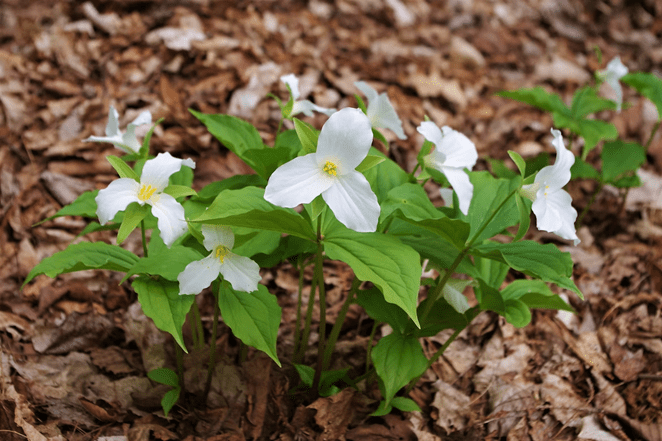
    These past few days the trilliums have begun to take over the hillsides and sunny patches along the forest floor and beside the park trails.  These beauties are the cause of bottlenecks as folks stop to snap photos or simply to enjoy their elegance.  There is one notable difference in the trilliums this year, at least where I live, although perfect in every way they are much smaller then usual.

    Curious about these miniature trilliums I did some reading on the topic and learned that the cooler winds and near freezing evening temperatures are causing a stunted growth in many spring flowers this year.  This certainly would be true in my own backyard as the north wind blows off Georgian Bay causing myself and my neighbors to don wool sweaters while out in our gardens.

    As I stood in the late afternoon sun admiring the loveliness of a hillside covered in trilliums a certain respect for their tenacity began to take hold. Despite the cold winds, duller days and near freezing rainfall these little gems doggedly took root, fought to grow as tall as possible and proudly display their best efforts at blooming.  Could God be speaking to us all through these little flowers?  Is it possible that the great Creator notices the courage and determination found in a simple wildflower?

    Medieval Catholic theologian Thomas Aquinas asserted that God is not just a being but Being itself, “present everywhere in everything,” not just confined to a supernatural heaven above but existing even in nature. If Aquinas is to be believed, then it is possible God not only notices these tiny trilliums but is cheering them on!

    Perhaps, they are the teachers, and we are the students; learning how to withstand the chilly winds of life. The lesson being: no matter what chilly breeze is blowing through our lives right now, we are to be like the trilliums and take root, stand tall and dare to show our beauty for all.  We may not always be at our best, but perhaps just the effort to grow and be present is enough.  The trilliums teach that we cannot let the chilly winds stop us from blooming exactly where we are planted.

    It is a marvelous thing to belong to a God so great that even small wildflowers are used to point us in the direction of a meaningful life. May we all be wise enough to pay attention!

    Blessings,

    Rev. Heather McCarrel

    Photo by David M. Chambers/Unsplash

  • Shepherding Sunday

    Shepherding Sunday

    For many Christians this is the week of the annual Shepherding Sunday service.  This is a service when the scripture passages of Jesus calling us his sheep are read alongside the widely loved 23rd Psalm.

    Jesus begins by describing not a good Shepherd but imposters who try to get into the sheepfold acting like a Shepherd but ultimately not caring one ounce about the sheep (John 10:1).  This is a warning that not all humanity is kind, generous or deserving of our trust.  Jesus does offer a list of the characteristics of an authentic Shepherd which include knowing each sheep by name, going ahead of the sheep and sacrificing himself for his sheep.    

    Thing is, once you have met this Good Shepherd it makes all the difference.  When he calls to your heart, you know it and when you begin to hear the melody of his love it becomes the tune that shapes your days.  As author Barb Roose writes, “For me, I find comfort in knowing that beyond what I see in humanity, Jesus is the Good Shepherd who has never let me down.”

    No matter what happens in life, nothing can take us away from our Shepherd; not betrayal, depression, job loss, debt or even death.  Once we become a part of His flock we will never be lost to Him.  We will never be beyond His gaze or His love. 

    And, this is exactly what David was writing about when he wrote the 23rd Psalm.  He had become so acquainted with God while he was a Shepherd that the image of God’s care stayed with David throughout a tumultuous life.  David knew that this Shepherd would never leave him but instead guide him through the valley of the shadow of death, along green pastures, beside still waters and into an eternal dwelling.  David knew, “Surely your goodness and unfailing love will pursue me all the day of my life…”.

    May we all take time this week to listen deeply for the call of our Shepherd,

    Blessings,

    Rev. Heather McCarrel    

    Photo by Biegun Wschodni/Unsplash