Category: Community Building

  • Spreading Seeds of Care, Connection, and Community

    Spreading Seeds of Care, Connection, and Community

    The best part of going away is coming home again!  My husband and I took a mini holiday this past week. We decided to spend a few days in a popular destination prior to the height of the tourist season.  The hotel, known for its luxury, didn’t disappoint nor did its reputation for friendly and welcoming staff; we will be going back.  The restaurants were not only full of charming atmosphere, and friendly staff but the food was also delicious.   

    What did surprise me were the tourists.   Folks seemed less friendly then I remember.  If a group of us were in an elevator, no one spoke or when a group of us were in the same tour group one afternoon, everyone was polite but certainly not friendly. It seemed that folks have become more insular, less interested in connecting, even in the slightest way, with others around them.  As I observed this change in human behavior I found myself asking, “When did this start to happen?  Is this the result of too much time spent on social media?  Is this a by-product of the pandemic? ” I was puzzled by what I was witnessing.   

    It wasn’t until our first evening home that the puzzle was solved. We had stopped at the corner store to purchase a bag of milk.  As I was leaving the store a young man fell in step behind me.  He was balancing several bottles of pop and a few bags of potato chips.  There was dust all over him from the top of his work hat, across his work shirt covering most of the logo from a local construction company, and all the way down to his work boots.   He looked to be on his way home from a long day.  Not wanting to slow him down I stepped aside and said, “You go ahead of me, I move rather slow these days.” 

    He responded, “That’s okay.  I’m in no hurry.” 

    He stepped ahead of me and walking through the automated doors he turned and held the door open with his shoulder and said, “Just in case it begins to close on you, I will hold it.”  I smiled and thanked him, knowing he had just solved the puzzle for me. 

    The reason folks down in the city seemed so indifferent to each other is because they don’t live where I live.  In the town I live we hold doors for each other, we smile and chit chat even with strangers and we most certainly care for the other. 

    His actions reminded me of the saying, ‘Humankind: be both!’

    As the first long weekend of the summer arrives may the hospitality of our small communities warm the hearts of the tourists and be carried back to the cities; seeds of care, connection and community.  

    Happy Summer,

    Rev. Heather McCarrel

    Photo by Gary Barnes/Pexels

  • World House

    World House

    Some years ago, a famous novelist died. Among his papers was found a list of suggested plots for future stories, the more prominently underscored being this one: “A widely separated family inherits a house in which they have to live together.” 

    This is the great new problem of our time.  We have inherited a large house, a great ‘world house’ in which we have to live together-black and white, Easterner and Westerner, gentile and Jew, Catholic and Protestant, Muslim and Hindu-a family unduly separated in ideas, culture and interest who, because we can never again live apart, must learn somehow to live with each other in peace. (Martin Luther King, Jr’s introduction to his talk, “The World House”)

    The world’s religions all agree it isn’t complicated to live in peace, simply “Do unto others as you would have them do unto you.”  Jesus simplified it even more, “love thy neighbour as thyself” (Matthew 22:37–39).   

    Who is our neighbour?  Anyone beyond ourselves. 

    Author Saul Bellows tells the story of a rabbi in a small village who mysteriously disappeared every Friday.  It was whispered, and the villagers sincerely believed, that on those days he ascended to Heaven itself.  A newcomer to the village heard this and was extremely skeptical.  So, making sure he was not seen, he stealthily followed the rabbi one Friday.  He saw the rabbi change into the clothes of a peasant.  Then, carrying an axe, he went into a nearby forest where he cut down a tree. He cut the tree into fire logs.  Gathering enough for a week’s burning he took them to the home of an old and frail woman.  After that, he returned to the village, changing back into his usual clothes. 

    And ever afterwards, when the villagers declared that every Friday their rabbi ascended to Heaven, the newcomer would say under his breath, “If not higher.”

    May we all ascend higher than heaven by our daily selfless acts of caring for our neighbours.

    Blessings,

    Rev. Heather McCarrel

    Photo by Priscilla Du Preez/Unsplash  

  • The World House  

    The World House  

    Some years ago, a famous novelist died. Among his papers was found a list of suggested plots for future stories, the more prominently underscored being this one: “A widely separated family inherits a house in which they have to live together.” 

    This is the great new problem of our time.  We have inherited a large house, a great ‘world house’ in which we have to live together-black and white, Easterner and Westerner, gentile and Jew, Catholic and Protestant, Muslim and Hindu-a family unduly separated in ideas, culture and interest who, because we can never again live apart, must learn somehow to live with each other in peace. (Martin Luther King, Jr’s introduction to his talk, “The World House”)

    The world’s religions all agree it isn’t complicated to live in peace, simply “Do unto others as you would have them do unto you.”  Jesus simplified it even more, “love thy neighbour as thyself” (Matthew 22:37–39).   

    Who is our neighbour?  Anyone beyond ourselves. 

    Author Saul Bellows tells the story of a rabbi in a small village who mysteriously disappeared every Friday.  It was whispered, and the villagers sincerely believed, that on those days he ascended to Heaven itself.  A newcomer to the village heard this and was extremely skeptical.  So, making sure he was not seen, he stealthily followed the rabbi one Friday.  He saw the rabbi change into the clothes of a peasant.  Then, carrying an axe, he went into a nearby forest where he cut down a tree. He cut the tree into fire logs.  Gathering enough for a week’s burning he took them to the home of an old and frail woman.  After that, he returned to the village, changing back into his usual clothes. 

    And ever afterwards, when the villagers declared that every Friday their rabbi ascended to Heaven, the newcomer would say under his breath, “If not higher.”

    May we all ascend higher than heaven by our daily selfless acts of caring for our neighbours.

    Blessings,

    Rev. Heather McCarrel

    Photo by Priscilla Du Preez/Unsplash  

  • Proud To Be Canadian

    Proud To Be Canadian

    This past month my husband and I spent some time traveling around England and Wales.  Prior to leaving Canada we had been advised to place small Canadian flags on our luggage and back packs so everyone would know we were Canadian.  Not thinking much of it, I did pack a few Canadian pins into our carry-on luggage but failed to pin them on.        

    That was until the second evening of our trip.  We had just finished placing our order in one of those quaint village pubs when the gentleman at the table beside us turned and said, “Oh, a couple of Americans! I have wanted to ask about that Trump fella you choose as a President.”

    We were quick to fix that misunderstanding.  He apologized and offered to buy us each a pint so to “mend the fence”.  Once back at our hotel room I pinned a small Canadian flag on both of our backpacks and these little pins made all the difference!

    We were stopped by waitresses, hotel staff and complete strangers wanting to share their Canadian stories; stories of family members and friends who now make Canada their home.  We heard heartwarming stories of Canadian care and hospitality.  One hotel worker asked if we had ever heard of a place called Kitchener-Waterloo as he will be moving there this September.

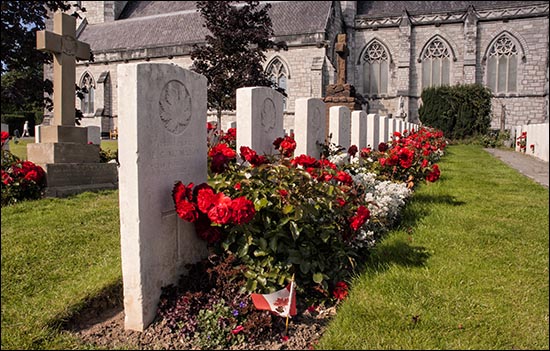
    It wasn’t until we visited St. Margaret’s Church in Bodelwyddan, Wales that my Canadian pride filled my eyes with tears.  In the churchyard of St Margaret’s, locally named the ‘Marble Church’, is the cemetery of over 100 Canadian servicemen and women who died during the First World War and two servicemen of the Second World War. Carved into each  headstone is a maple leaf along with the names, birthplace, and age of each Canadian. This churchyard is kept immaculate and our Welsh guide solemnly said, “To think they came over to help us fight a war that wasn’t their own and they never went home.  We will always be grateful to Canada for this.” 

    In total there was an estimated 15, 000 Canadian Service men and women who went to England and Wales during WWI.  Standing tall amid the graves is a Memorial and inscribed upon it is: “To the memory of Canadian soldiers who died at Kinmel Park Camp during the Great War. This memorial was erected by their comrades. Their name liveth for evermore.”

    It was while we slowly paused at each grave, reading the names and ages that I began to tear up; young men and women between the ages of 19-21, mere children.  I took off my pack back and taking the Canadian pin from it, I placed it among the Canadian coins and river rocks that were scattered around the memorial.

    This weekend is Canada Day.  A day set aside to celebrate and reflect on what it means to be Canadian. We have a past both prideful and painful and a future full of opportunities to mend the wrongs and honour the rights.   

    Happy Canada Day,

    Rev. Heather McCarrel     

    Canadian Flag Photo by Erik McLean/Pexels

  • Hiking For Hospice

    Hiking For Hospice

    It was late one cool September Saturday when my mother arrived to Hospice. She had one of those illnesses that crept through her body almost undetected until it was too late.  Once discovered there was a swiftness to her decline.  We had done all we could for her at home; rented the hospital bed, gathered in all the necessary equipment, shopped for the foods she could eat and where we could do no more there were these angelic nurses who arrived to do the rest of her care. She was a polite patient but not necessarily co-operative. By nature my mother was a very private and defiantly independent woman which, in the past, had bode well for her.   

    I recall my father, two brothers and I sat in silence while the Hospice staff settled her in. This was a silence of relief as we each began to relax from the weeks of emotional heavy lifting.  No longer were we the ones having to remind her to take her meds, rest, or use her walker.  Now, we could start to face our own grief and to be a gentler presence; a profound gift indeed.

    It wasn’t the first time I had been to the hospice. As a minister I had sat by the beds visiting both parishioners and their loved ones.  I had firsthand experience of the kindness and dedication of the hospice staff.

    So impressed have I been with the gentle but strong presence of this hospice that I am now counted among their staff.  It is with humble gratitude that I walk the halls as a Spiritual Care Provider, aka, a Chaplain.  I witness the dedication of all the staff from the remarkable clinical staff, compassionate kitchen staff,  friendly cleaning/enviromental services staff,  well trained and warm hearted volunteers to the busy Management Team.  It takes an army to run a hospice and lots of Chapman ice cream!

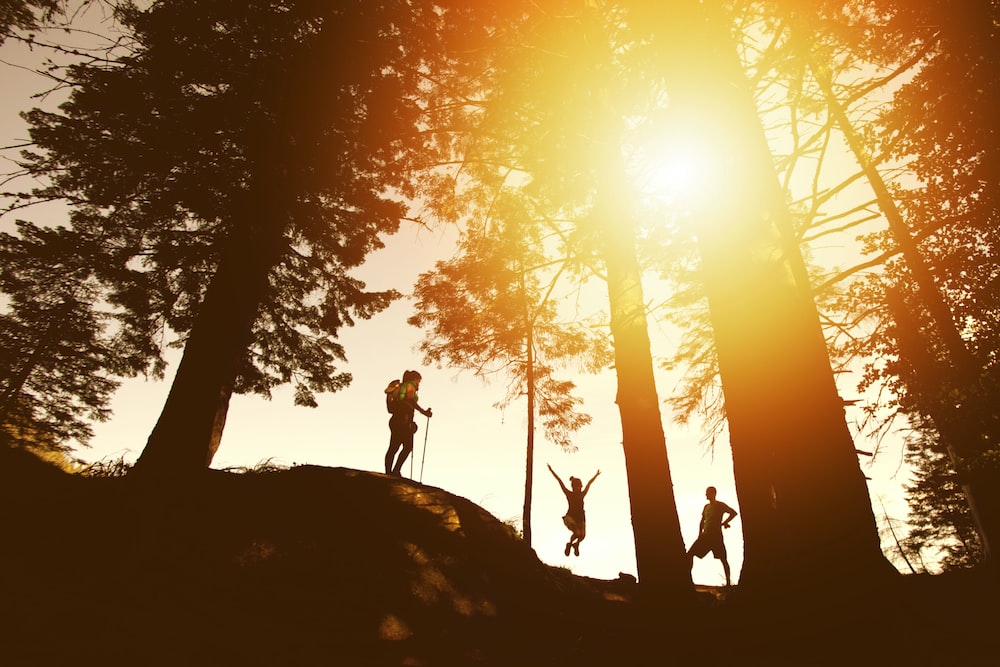
    It also takes a community to run a hospice.  That is why I will be at Harrison Park on Saturday May 27th from 11:00 a.m. to 2:00 p.m. for the wrap up hike and BBQ as we rally around Grey-Bruce Hospice Inc, known to us all as Chapman House. This will be the first in-person Hike for Hospice in two years.  A day of fundraising and gathering, it isn’t too late if you too would like to join us. Please go to https://www.greybrucehospice.com/ for details.

    Hike-Bike-Ride-Paddle-Skip-Play all in the name of Hospice! I hope to see you there,

    Rev. Heather McCarrel

    Photo by Photo nic chiro/Unsplash

  • Do Not Despair

    Do Not Despair

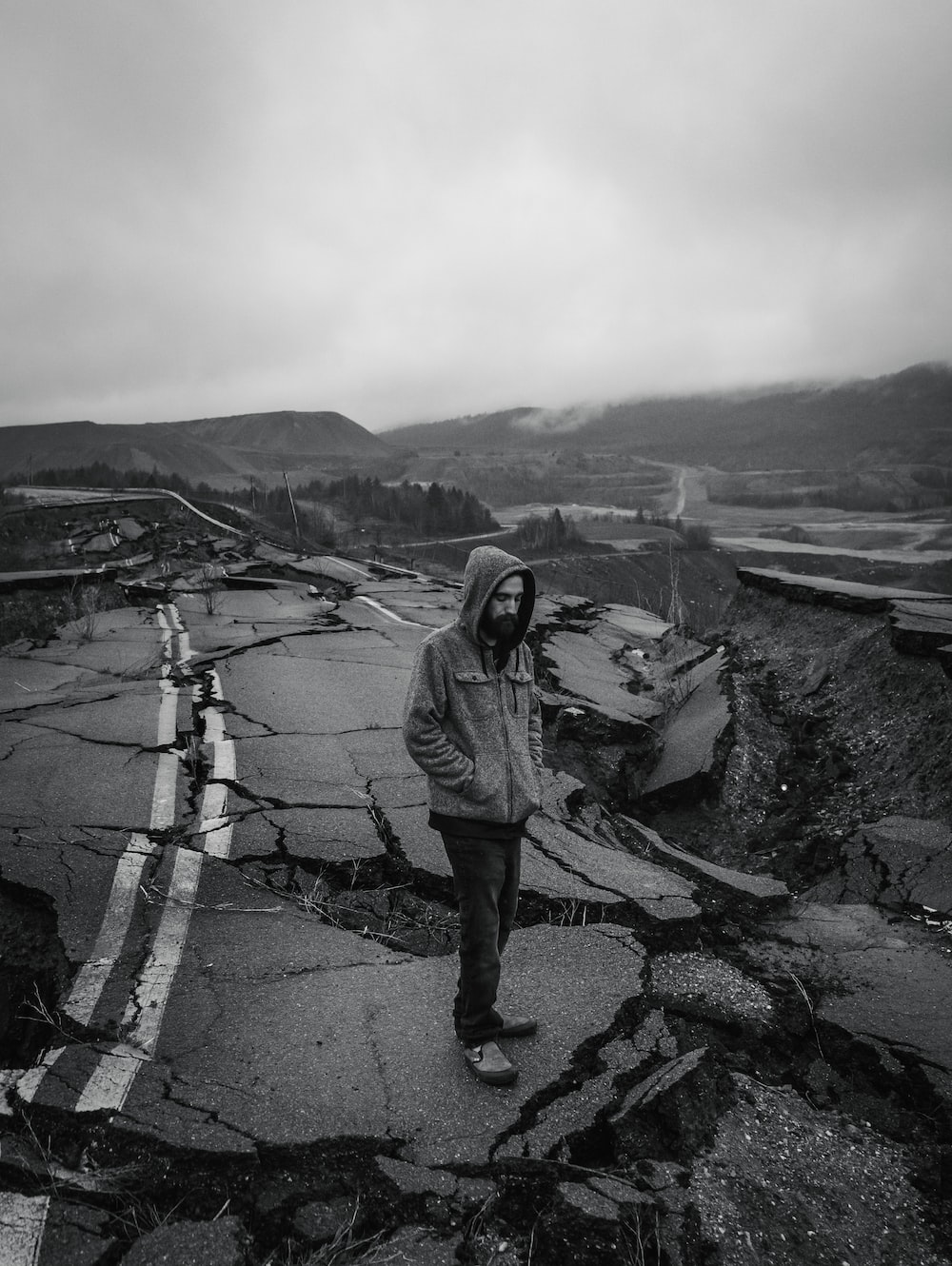
    It was a damp, cool and foggy morning; perfect for a walk through the park.  As we quietly strolled past the tall bare trees draped in mist and over small wooden bridges almost swamped by the over flowing streams I thought how perfect this weather fit my mood.

    The recent headlines had left a fog hanging over me, images of broken bodies pulled from tons of debris.  Two massive earthquakes in Turkey and Syria, the first at 4:00 a.m. on February 6th as folks were slumbering snuggly in their beds registered a 7.8 magnitude which was felt as far afield as Lebanon, Cyprus, Greece, Israel, and the Palestinian territories. A second quake, which recorded a magnitude of 7.5, struck just 9 hours later. Both resulting in a death count at 41,000 and rising.

    How can one look at the images, read the data, watch the carnage on the evening news and not be affected?  Besides donating funds (check out Canadian Red Cross at redcross.ca) we can also pray asking for God’s light, love and healing to reach each victim and strengthen the rescue workers.  

    It is easy to despair and feel vulnerable. We know that one minute these people were sleeping soundly and the next chaos ensued. We know they did not deserve this to happen and we know, from witnessing this devastation that it could happen to us too.  Perhaps our chaos may not come as an earthquake but may be disguised as a pandemic, cancer or a car accident. Some were left feeling anxious this past weekend as an American Fighter Jet shot down an Unidentified Flying Object over Lake Huron. This happened way too close to home!

    Thing is, we have only so much control over what happens in this world and there is no sense worrying over that which we cannot control.  What we can control is how we spend our days. The moments of our lives add up to the sum of our days and result in the story of our lives.  It matters that we handle what we can control well. 

    Richard Wagamese, a truly inspiring First Nations writer shares this wisdom,  

    “All we have are moments.  So live them as though not one can be wasted.  Inhabit them, fill them with the light of your best good intention, honour them with your full presence, find the joy, the calm, the assuredness that allows the hours and the days to take care of themselves.  If we can do that, we will have lived well.” (Embers, 161)

    May we all continue to hold the victims in our prayers while also shaping our moments into lives of light, joy, peace and love.

    Blessings,

    Rev. Heather McCarrel

    Photo by Dave Goudreau/Unsplash

  • Poking Holes In The Dark

    Poking Holes In The Dark

    Jesus tells us that we are the light of the world and we are to shine His light for all to see; “do not hide it under a bushel”, he warns (Matthew 5:16).  Hearing these words always reminds me of the author Robert Louis Stevenson who is best known for works such as Treasure Island and Strange Case of Dr. Jekyll and Mr. Hyde.  I once read a story from his childhood that illustrates what it means to be Christ’s light in the world.

    As a child Robert Louis Stevenson was in very poor health.  One night, when he was quite sick, his nurse found him with his nose pressed against the frosty pane of his bedroom window.  “Child, come away from there.  You’ll catch your death of cold,”   but young Robert would not budge.  He was mesmerized as he watched an old lamplighter slowly work his way through the black night lighting each street lamp along his route.  “See, look there,” Robert pointed, “There’s a man poking a hole in the darkness.” 

    That is what we are called to do, poke holes in the darkness.  To be Christ’s light means we go into dark places and share God’s love, forgiveness and acceptance.  These dark places may be grief, poverty, illness, injustices and loneliness. 

    It takes courage and faith to be Christ’s light in a darkened world.  So often the world rewards the “winner” at the risk of many “losers”.  What would TV be like today if we took out the competition to be the best and instead just celebrated everyone’s unique talents?  What if everyone received second place and praising God came in first place?  Then we would see the light everywhere! 

    We need not do grand acts that bring us a lot of attention and accolades, as Neal A. Maxwell writes, “Small lights have a way of being seen in a dark world.” Simple acts as taking time to listen to each other, building each other up and speaking words of love produce a powerful light.   

    Dwight L. Moody put it best when he preached, “We are told to let our light shine, and if it does, we won’t need to tell anybody it does. Lighthouses don’t fire cannons to call attention to the shining—they just shine.”

    Go and be a lighthouse,

    Rev. Heather McCarrel

    Photo by Evgeni Tcherkasski/Unsplash

  • Casting Kindness

    Casting Kindness

    I got caught in a net this week; a net of kindness.  It all started off so unassumingly.   I had phoned the cell phone supplier with questions regarding my bill and what seemed like 12 hours of being on hold my turn finally arrived.

    After explaining the reason for my call the operator politely sighed and in a soft and kind voice said, “Sometimes things happen that we have no control over.  I am sorry this has happened to you.  Let’s get this fixed today.”  She began to explain what she was doing as she clicked her computer keys. It was just a mix up on my bill and within minutes she had corrected the mistake.  As I thanked her, she again said, “As I said before, sometimes things happen that we have no control over.  It is hard but we can help each other out.”

    After hanging up the phone, I paused and wondered if she was an angel or some kind of Zen Master!  Who knew that having a billing mistake would make my day?

    She was right, there are times when things happen that we have no control over and it is hard, but together we help each other out.

    I suspect that is what Jesus meant when he called the fishermen to be his disciples.  It is written that Simon (also called Peter), his brother Andrew, James and his brother John put down their fishing nets so to follow Jesus. (Matthew 4:18-23)

    Jesus taught them how to use the nets of kindness, understanding, acceptance and healing words to catch those falling into despair and darkness.  Jesus knew the world was in need of such “catching”.

    It would seem Jesus also uses cell phone operators to do the same kind of healing.  I wonder what the world be like if we all followed Jesus’ teaching, “…in everything, do to others what you would have them do to you…” (Matthew 7:12) How many more could we catch?

    In these darkened days of winter let us all join in the work of Jesus’ fishermen and throw wide a net of kindness, gentleness and understanding.  As the Dalai Lama said, “Be kind whenever possible.  It is always possible.”

    Blessings,

    Rev. Heather McCarrel

    Photo by Andrew Thornebrooke/Unsplash

  • Finding Hope  

    Finding Hope  

    He drew a circle that shut me out

    — Heretic, rebel, a thing to flout.

    But love and I had the wit to win:

    We drew a circle that took him in!

    (Edwin Markham)

     Round tables are my favorite!  Everyone sitting at a round table is equal and always there is room for one more chair.  I was reminded of round tables at Bible study last week; we were studying the parable of The Good Samaritan.

    It is the story of a nameless man who selflessly provides all that is needed to rescue someone beaten and left to die in a ditch. It is a story about social boundaries removed so God’s love and care can be set free.  It is a story of radical response when facing the choice of indifference or active compassion. 

    The Samaritans in Jesus’ day were despised and ridiculed; they were considered the lowliest of all humanity. So, of course Jesus uses these very people to teach of God’s powerful grace and transformative love. 

    What makes the Samaritan good in this story is that he has every reason to respond to the hatred, cruelty and shame placed on him by others with much of the same, but doesn’t.  Instead, his response is to extend a hand of welcome, lifting the broken man onto his donkey and walking him to where healing can begin.  He doesn’t bother asking who the broken man is or whether this man is deserving of such help; he just helps.  This is the most powerful part of the story. One who has every reason to respond with hatred but instead responds with love, this is where we find hope for the world. 

    Hope for the healing of humanity is found in those who refuse to be the hatred or cruelty in the world but instead respond to God’s call to be light, love and understanding.  As written in 1 Peter 3:9, “Don’t repay evil for evil. Don’t retaliate with insults when people insult you. Instead, pay them back with a blessing. That is what God has called you to do, and he will grant you his blessing.”

    True humility teaches that we all take our turn being the broken one in the ditch. The Good Samaritan reminds us “…of a merciful God who wants to bind up and heal all your hurts. Can you see this? You on the road – injured by the world and God as the one that picks you up….This God who acts as a stranger on the road will never judge you or your needs. This God pours His Mighty Mercy like oil and wine. If you will let Him do this…”. (Pastor John Bright)

    When we face the cruelty of others may we see the pain they hold and understand it isn’t about us, instead may we respond with a quiet respect trusting God’s love has the power to heal us all. 

    As we light the first candle of Advent, the Candle of Hope, may we remember that hope is held in our response to the hardness of life; a response rooted in God’s healing love.

    Blessings,

    Rev. Heather McCarrel

    Photo by Ronak Valobobhai/Unsplash

  • Lighten The Load

    Lighten The Load

    Have you been to the grocery store lately?  On Monday I took time to stock up our supplies and was left speechless!  To save on time I had gone to the store closest to my home where I discovered orange juice at a whopping $8.59 a jug and white bread at nearly $6.00 a loaf. 

    Needless to say, I quickly returned to my car and drove across town to a more economical store.  As empty nesters my husband and I do not spend nearly as much as we used to at the grocery store.  Nonetheless, after years of penny pinching while raising our children habits don’t change. If I can get the same juice for $5.00 less only 10 minutes away, I will drive 10 minutes.

    However, even at the economical store the prices were startling. Bread, meat and even a can of soup have gone up more quickly than ever in my 55 years of living. How are young families coping?  I recall when my 3 children were teenagers we went through a loaf of bread daily not to mention cereal, milk and lunch supplies.  But it isn’t just the young families struggling; many seniors are left wondering how they will manage with such high prices.

    On October 27th, 2022 the Toronto Starr reported that Food bank usage across Canada hit an all-time high, nearly 1.5 million visits in one month alone. 

    What can we do? 

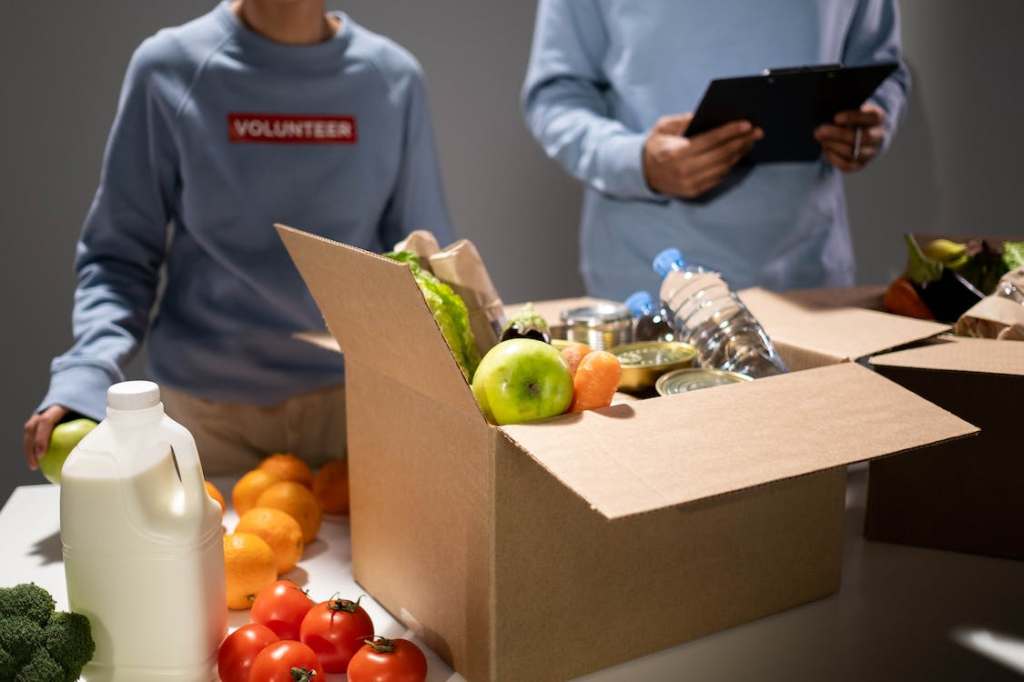
    If you are able please consider donating to your local Foodbank.  Any donation is appreciated: a can of soup, a jar of peanut butter, a bag of pasta, whatever you can spare.  What is most helpful, however, are cash donations.  With money to spend those managing the Foodbanks can buy in bulk what is most needed.

    If you are part of a faith community why not have some fun with a Food Drive Challenge?  At one church we had a month long peanut butter challenge.  The challenge was between smooth or crunchy peanut butter, the one with the most donations won.  The Crunchies won!  At another church one of the teens decided to build a wall against hunger.  Enough canned food was donated to erect a wall that took up half of the front of the sanctuary!  There are many fun ways to help others.

    Perhaps another way to make change in the lives of others is by offering to volunteer at your local Foodbank.   

    As Charles Dickens wrote in his book Doctor Marigold, “No one is useless in this world who lightens the burdens of another.”

    May we all consider ways to lighten each other’s burdens,

    Rev. Heather McCarrel

    Photo by Cottonbro Studio/Pexels